10 years later ...
Art and sport don't see eye to eye over a deliberately abandoned Olympic pitch

Is football art? The beautiful game arguably lacks the cultural capital invested into cricket – a sport whose longueurs have long inspired a literary tradition in the press box – or, across the Atlantic, baseball, a touchstone in the great American novel. True, stylised stadiums have decorated the canvases of L.S. Lowry, while the muscular socialist realism of the USSR found a space for soccer everywhere from the Antarctic to the metro stations of Moscow. Overall, though, the game of the people has tended to keep a wary distance from the art world.
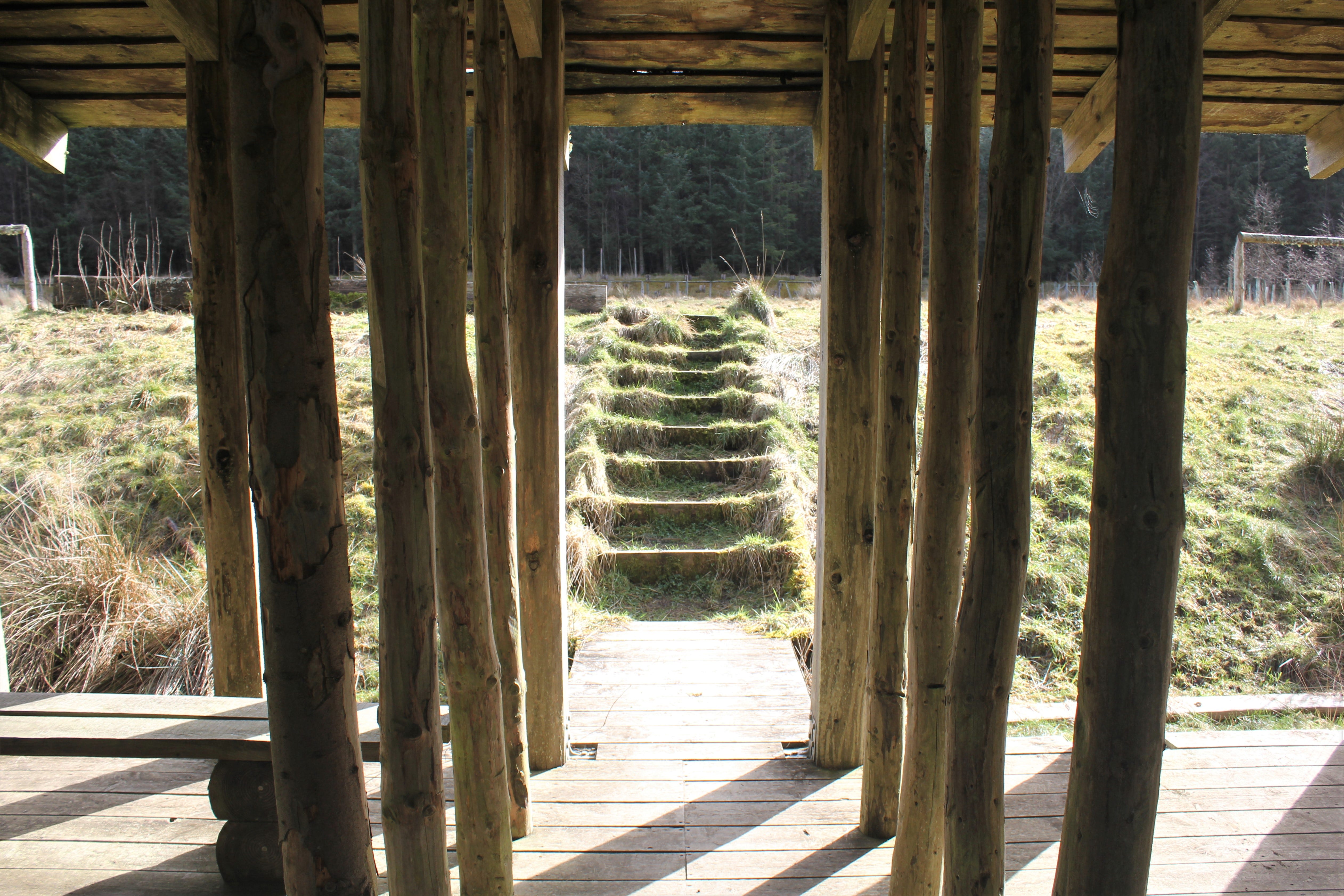
Which might explain much of the bafflement around the Forest Pitch near Selkirk in the Scottish borders. Conceived as an art project to coincide with the 2012 London Olympics, the creation of a single-use football field was the brainchild of Craig Coulthard. His vision was a field hemmed in by woodland, a wooden shelter constructed from the trees felled to create the playing surface, and spectator seating made from the stumps. A sustainable rural sporting idyll, perhaps, its simplicity throwing up a stark contrast with the lavish complexity of the Olympic jamboree.
The action took place on August 25 as part of the Cultural Olympiad that surrounded the 2012 Games. Four teams, two male and two female, were drawn up of amateurs. Many of them had only recently acquired British citizenship or leave to remain in the country. Emerging from the dense, shady woods of Clarilawmuir plantation into the vivid open space of an immaculate green sports field, they played their part in a journey from darkness to light, a celebration of modern Britain as an outward-looking, welcoming nation.
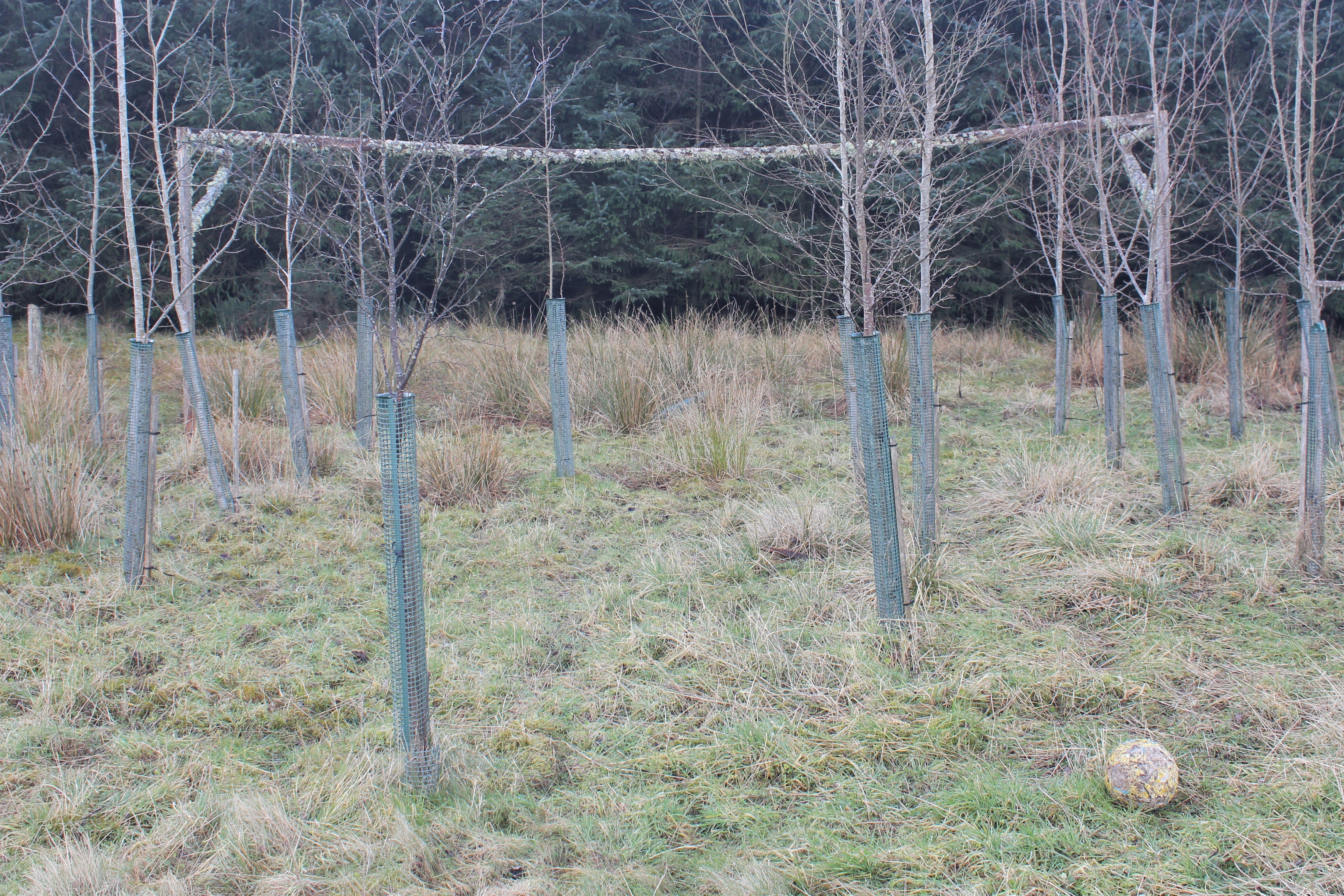
So far, so good. But the second half of the plan, a deliberate re-wilding of the site after just one day of footie action, raised eyebrows at the time and continues to do so. After staging those two games, the field was left alone. The white lines were planted with new trees and the pitch was left to return to nature. This was a key part of Coulthard’s vision, but for many it prompted questions about whether this represents any sort of value for the £460,000 grant spent on Forest Pitch.
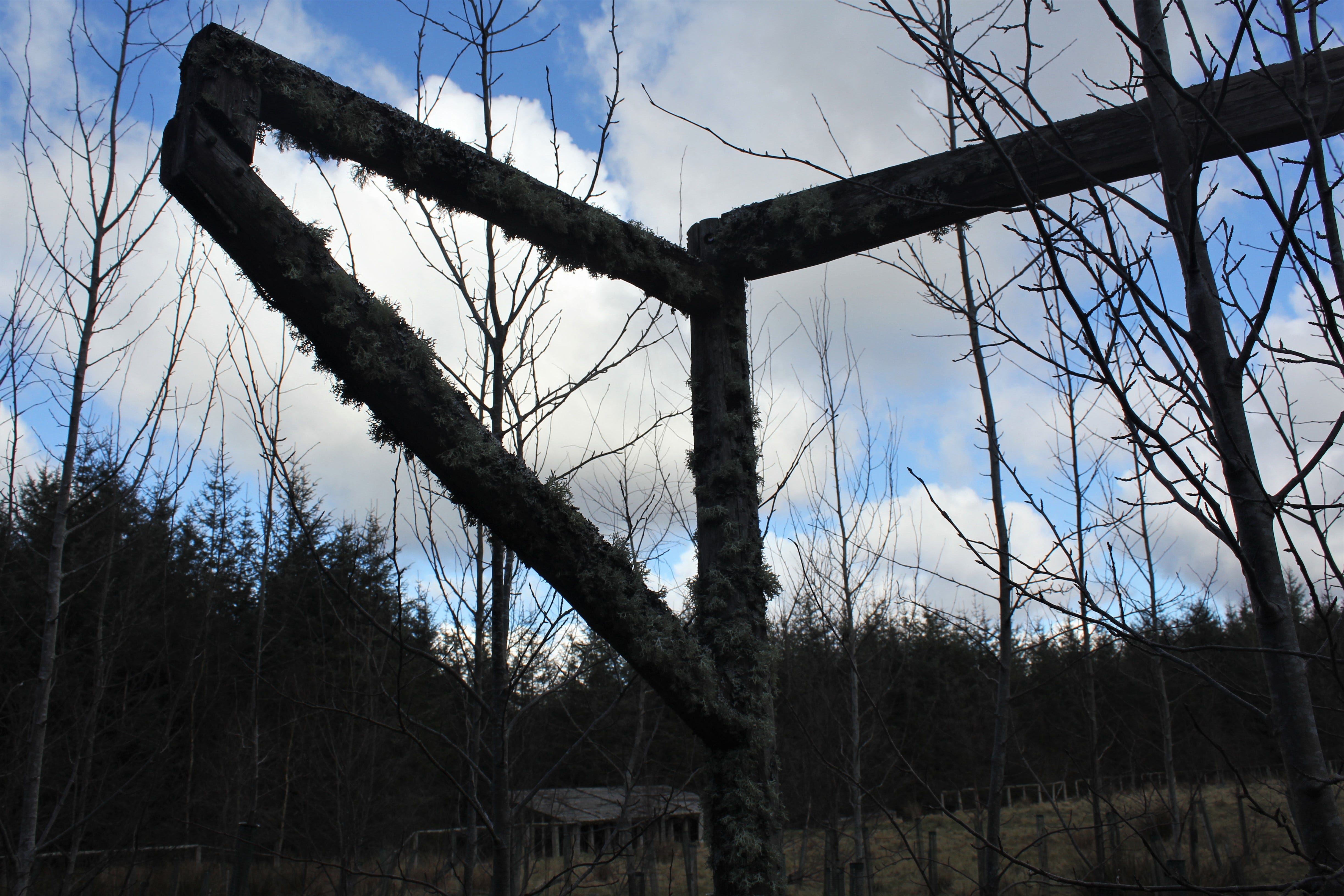
Today, 10 years after the event, there’s little evidence of a football field. The playing surface is overgrown, dense clumps of grass a threat to any ankle. Saplings dot the playing area, the ‘D’ at the edge of the penalty area clearly visible. The wooden shelter, its geometric form intended to recall nearby Gala Fairydean’s famous brutalist stand, is expected to survive at least a couple more decades. There was an idea to include interpretation boards, telling the story of the Forest Pitch project and its subsequent return to nature, but this has yet to come to fruition.
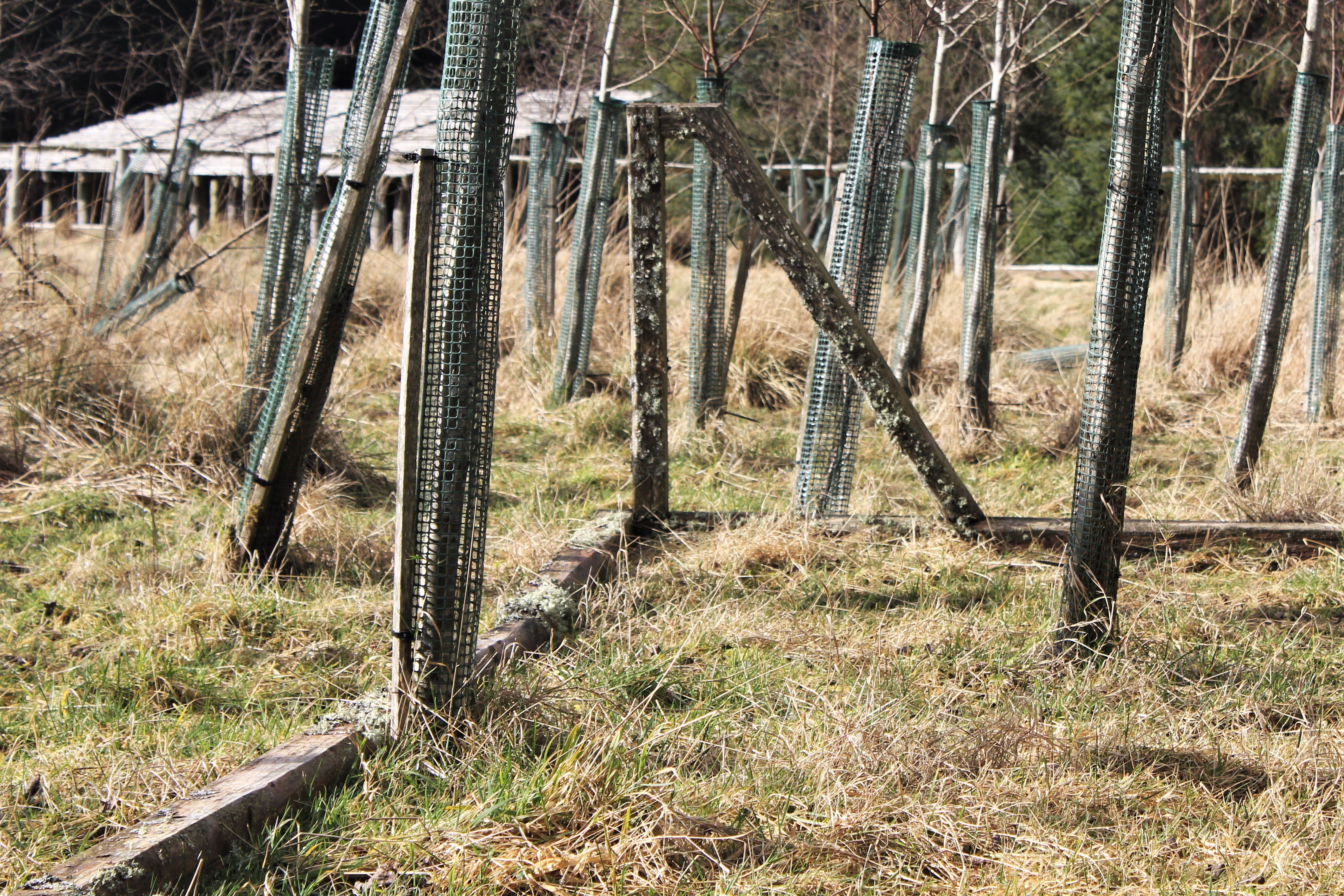
Vandalism, perhaps inevitably, has taken its toll: many young trees have been destroyed, and one set of goalposts has been torn down. Storm damage, or an ironic echo of Scottish fans celebrating Wembley triumphs of the past?
When the project was selected – one of 12 across the UK in the build-up to the Games, drawn from a 98 Scottish entries – there were hopes that it might provide a catalyst for greater public engagement with the arts. At the time, in 2009, Jim Tough of the Scottish Arts Council said: “The active involvement of individuals and communities will be key to their success, and we look forward to seeing many more people encouraged to enjoy the arts through this, the most ambitious and wide ranging art commission in the UK.”
That, though, might be a forlorn hope. True, the layby next to the entrance to the copse is often busy, the woodland, just off the road between Selkirk and Newton St. Boswells, remains a popular spot for walkers. As per the initial idea, many find it a talking point; in contrast with the original vision, though, the talk takes on a querulous tone. “Waste of money” seems to be the verdict, amid reflections on what kind of lasting community sports facilities could have been built for the same sum.
The contrast was only intensified in 2018 when Selkirk FC, the oldest football club in the Borders, folded. The Souters, founded in 1880, made a small but significant contribution to the round-ball game in a region where rugby is king. Shortly after Forest Pitch, though, the club moved up to the Lowland League, part of the newly-minted pyramid in Scottish football. A neat wooden terrace at the Yarrow Park home was a tangible legacy of that move – and perhaps an unintended echo of the wooden pitch returning to the forest nearby – but extravagant signings such as former Scottish international Garry O’Connor proved unsustainable. Selkirk Victoria, of the Border Amateur League, keeps the football flame alive.
Oddly, Selkirk also flirted with the arts, becoming the first club in Scotland to appoint a Poet in Residence. Thomas Clark, a librarian at Hawick High School and a devotee of the Scots language, took up the unpaid role in 2015 and his verses evoke the tingle of match-day excitement even at the grassroots game. While Clark’s verses ultimately serve as something of an epitaph for a sadly-missed local team, the Forest Pitch project remains largely unmourned in and around Selkirk, provoking more frustration than reflection.